


My speech at SEMICON TAIWAN on Sept.4, 2026:
My name is Annegret Pille-Hentschel, and I am the CEO of CrossWorld BRIDGES. I specialize in global business communication and intercultural collaboration, with a particular focus on the semiconductor industry. I work with international teams and business partners across cultures — and today, I would like to share some practical observations on how cultural awareness can strengthen business.”
I would like to start with a simple question:
What makes international business collaboration successful?
Is it technology, expertise, the quality of a product or service? Of course, all of these matter. But after many years of working with people from different countries and cultures, I have learned that there is one other factor that is often underestimated: How well do we understand the way our counterparts in different countries communicate, make decisions, build trust and do business?
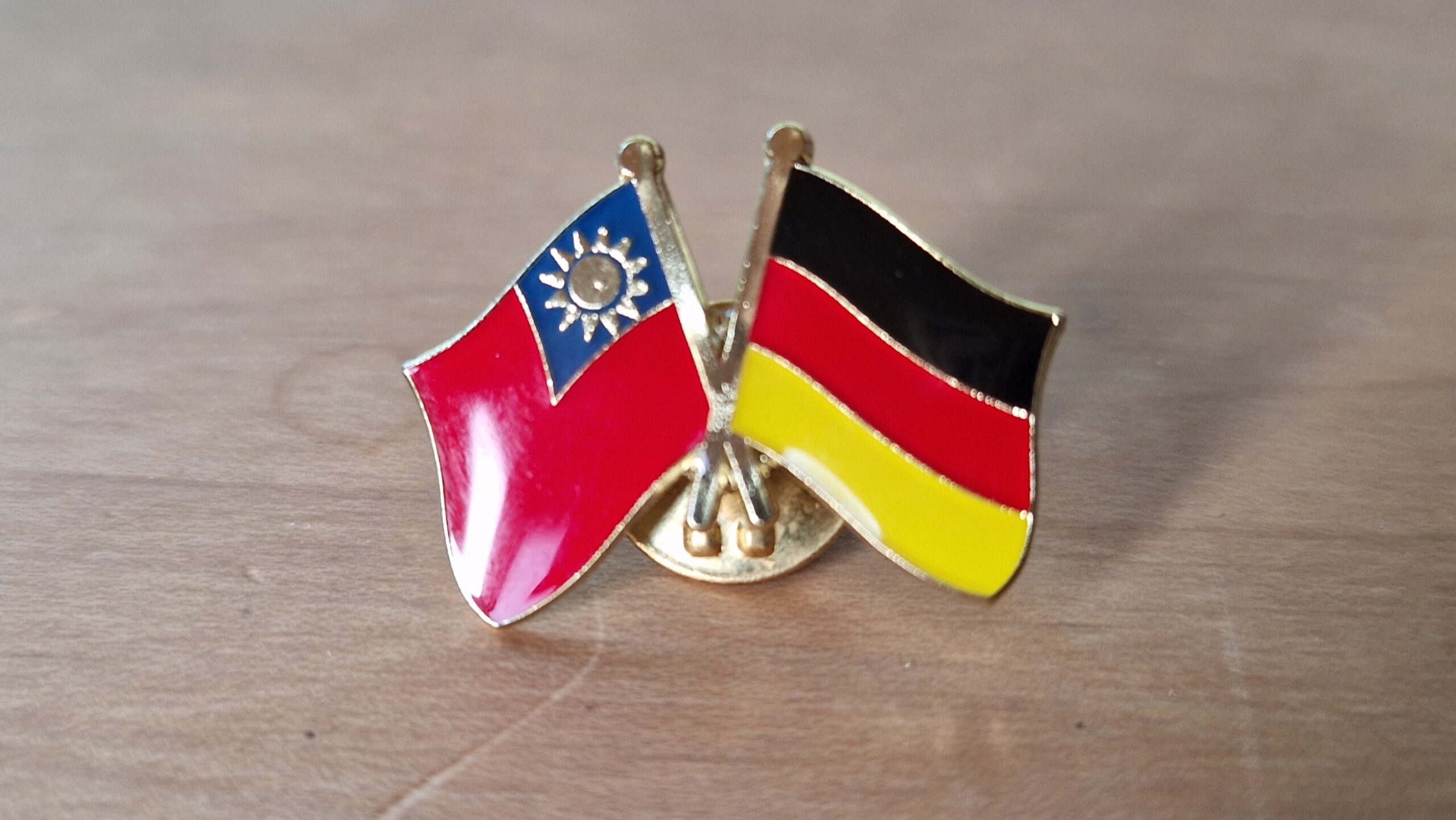
Taiwan and Germany are becoming increasingly connected through technology partnerships, suppliers, customers and global teams. And when two highly capable business cultures come together, cultural awareness can make a real difference.
Today, I would like to focus on three areas where cultural awareness can directly strengthen business.
1. Communication
Understanding the message behind the message
When German and Taiwanese professionals work together, differences in communication can sometimes create friction. Not because one side communicates better, but because they may have different expectations about what effective communication looks like. German business communication is often characterized by a preference for directness, explicit disagreement and getting to the point quickly. In Asian business contexts, communication can place greater emphasis on maintaining harmony, showing respect and avoiding unnecessarily confrontational exchanges. Both approaches have their strengths. But they can also lead to very different interpretations. What one side intends as clarity can be experienced by the other as confrontation. What one side intends as respect can be experienced by the other as a lack of clarity.
Of course, these are tendencies, not rules. Within both Germany and Taiwan, individuals, companies and industries differ greatly. This is where cultural awareness becomes practical: not changing who we are, but understanding when our usual way of communicating might create unintended friction.
So it is not only about what we say. It’s also about how the other person interprets what we say.
2. Persuasion
Understanding what makes a business case compelling
The same applies to persuasion. We may use the same facts, the same product and the same value proposition — but frame the value differently. In some business contexts, the focus is primarily on what the customer will gain, the benefits, the good. In others, highlighting risks, costs or potential disadvantages of not taking action can be equally important for making the business case. What does this mean? The product stays the same, just like the technical specifications. But the way we frame its value may need to change to be successful. And this is where cultural awareness becomes a business skill rather than a soft skill. It’s not only about what we want to say. It is about what our counterpart needs to hear in order to recognize the value. And this, of course, can have a direct impact on business performance.
3. Trust
Understanding how successful partnerships are built
Trust is another area where expectations can differ. German business relationships often place strong emphasis on competence, reliability, transparency and delivering on commitments. In Taiwan, these factors are just as important, but relationship-building and personal connections can also play a significant role in developing trust. If we don't recognize these differences, one side may think: “We have delivered everything we promised — why isn't the relationship developing?” And the other side may be thinking: “We still need to get to know each other better before we can fully trust this partnership."
What does cultural awareness do for business?
Cultural awareness is not about memorizing how different nationalities behave. And it’s certainly not about stereotyping or putting people into boxes. It is about becoming aware of our own cultural assumptions. Because we all have them. We have assumptions about what good communication looks like. What a good should be like. How quickly someone should respond or decide and how disagreement should be expressed. And often times we are not even aware of these assumptions, because they feel completely normal to us.
Cultural awareness actually makes the invisible visible. Once we see those assumptions, we have a choice. We can adapt, clarify, ask better questions. And we can become much more effective in international collaboration.
What happens when we ignore cultural awareness?
What happens when we don't pay attention to cultural differences? Usually, nothing dramatic happens overnight. And that is exactly the problem. Instead, small misunderstandings accumulate. A message is interpreted differently than it was intended. A decision takes a little longer. A customer doesn't fully connect with our value proposition. There are many more to name. And eventually, these small things can become very tangible business issues: delayed projects, silent conflicts, missed business opportunities. The challenge is that these costs are often invisible. We don't necessarily see them on a balance sheet as "cultural misunderstanding." We see them as delays. As rework. As difficult communication. As a customer who didn't buy. And that is why I believe cultural awareness deserves a place in global business. Not because culture is everything. But because ignoring culture can quietly become very expensive.
Taiwan and Germany: A powerful combination
And this brings me back to Taiwan and Germany. Both ecosystems bring enormous strengths to the semiconductor industry. And there is enormous potential in bringing these strengths together. But successful collaboration requires more than technical compatibility. It requires human compatibility. And that is where cultural awareness can become a competitive advantage.
So, if I could leave you with just one thought today, it would be this: Cultural awareness is not about telling other people how their culture works. It is about understanding our own assumptions — and recognizing how they may be interpreted by others. When we do that, cultural differences stop being obstacles. They become information which helps us communicate more effectively. Sell more effectively. Build stronger relationships. And ultimately: do better business. So, if you are working across cultures, I would encourage you to ask yourself one simple question: Where might cultural assumptions be creating friction in our business today — and what could we do differently? If this is a question you are dealing with in your organization, I would be very happy to continue the conversation with you after the session.